Yale club fair. Self-initiated.
Creative Tech Stamp Rally
- problem
- constraint
- method
- outcome
- role
- Product designer and creative technology
- scope
- Self-initiated, Yale club fair, 2 iterations
- team
- Mandy Chen, Chris Shia
- year
- 2026
- tools
- Figma, Figma MCP, Claude Code, database, Vercel
01 / problem
Yale doesn't have a strong creative tech community.
Yale's club fair packs over 200 clubs into one loud room. To join anything, a student has to notice a club, find the booth, stop, talk, and sign up. Every step loses people.
200+
clubs at one bustling fair
That funnel is hardest for niche communities. Art, design, and creative tech clubs are small, scattered across the room, and don't get the foot traffic of the big clubs. Students who would love them walk right past. Our goal: guide students through that funnel to the creative tech clubs that fit them.
- Notice a clubsome never see it
- Find the boothsome get lost
- Stopsome walk past
- Talksome move on
- Sign up
02 / year 1: a paper MVP
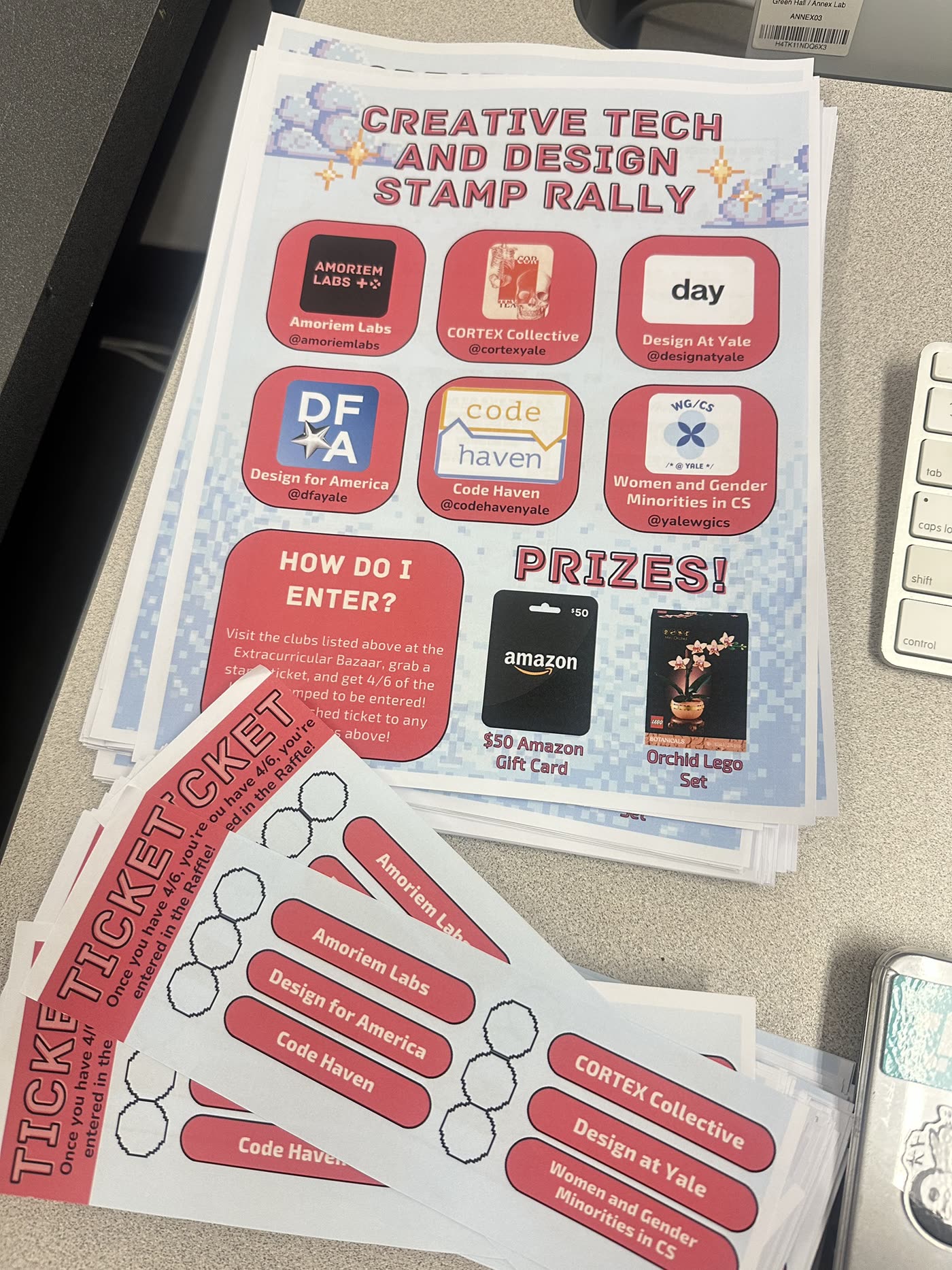
A paper stamp rally across 6 clubs
The stamp rally started as Chris's idea, and I helped run it. Six creative tech clubs, one stamp ticket, and four of six stamps entered you into a raffle for a $50 Amazon gift card or an Orchid Lego set.
- 6
- clubs, one ticket
- 4/6
- stamps = raffle entry
- 2
- prizes: $50 gift card + Orchid Lego set
It worked as a nudge. People visited booths they would never have found. But it was hard to run and impossible to learn from. Tickets got lost, clubs stamped by hand, we collected emails by hand, and there was no data on who joined or where they dropped off.
03 / year 2: rebuilt as a web app
Rebuilt as a web app anyone can join from their phone
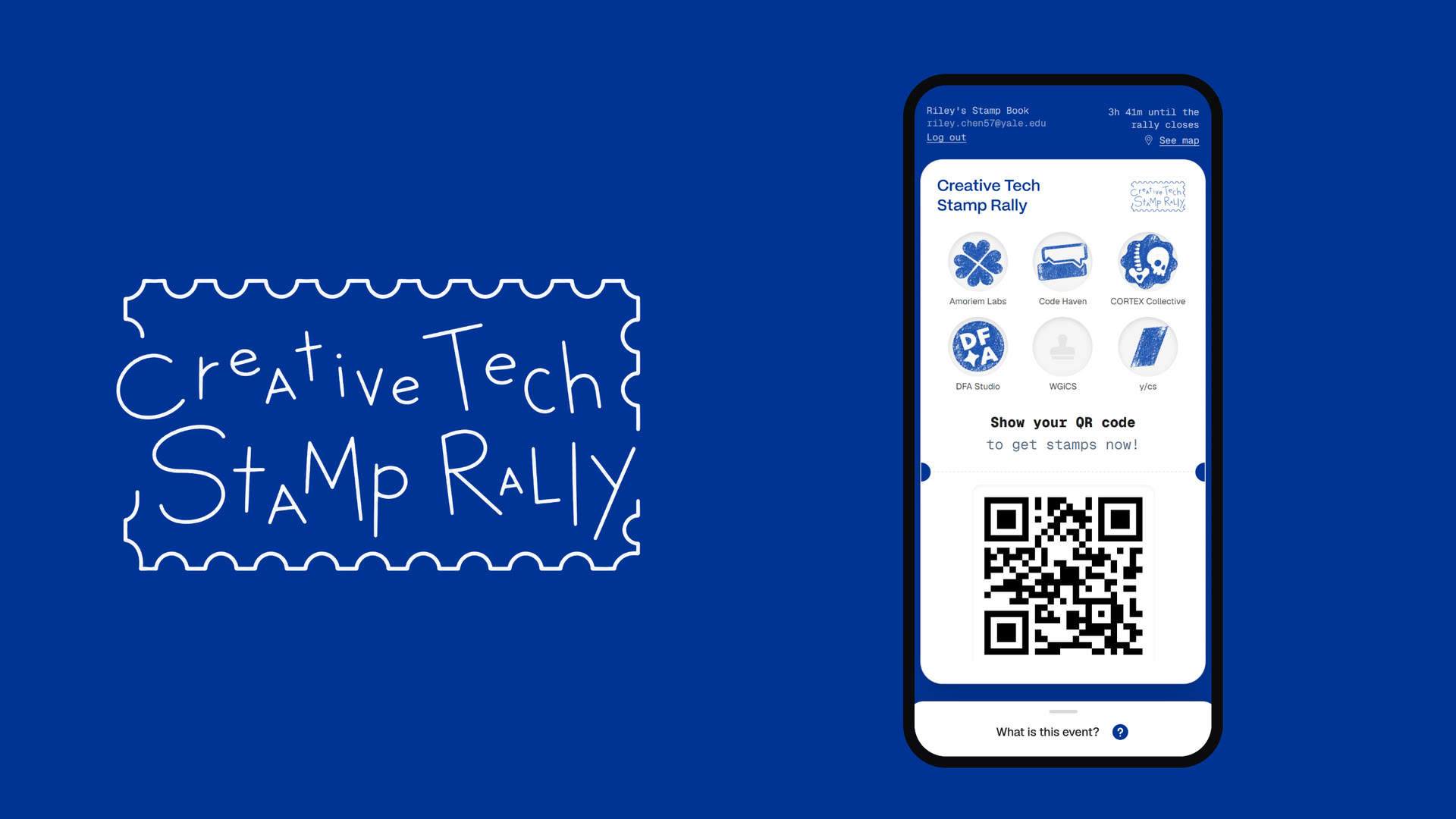
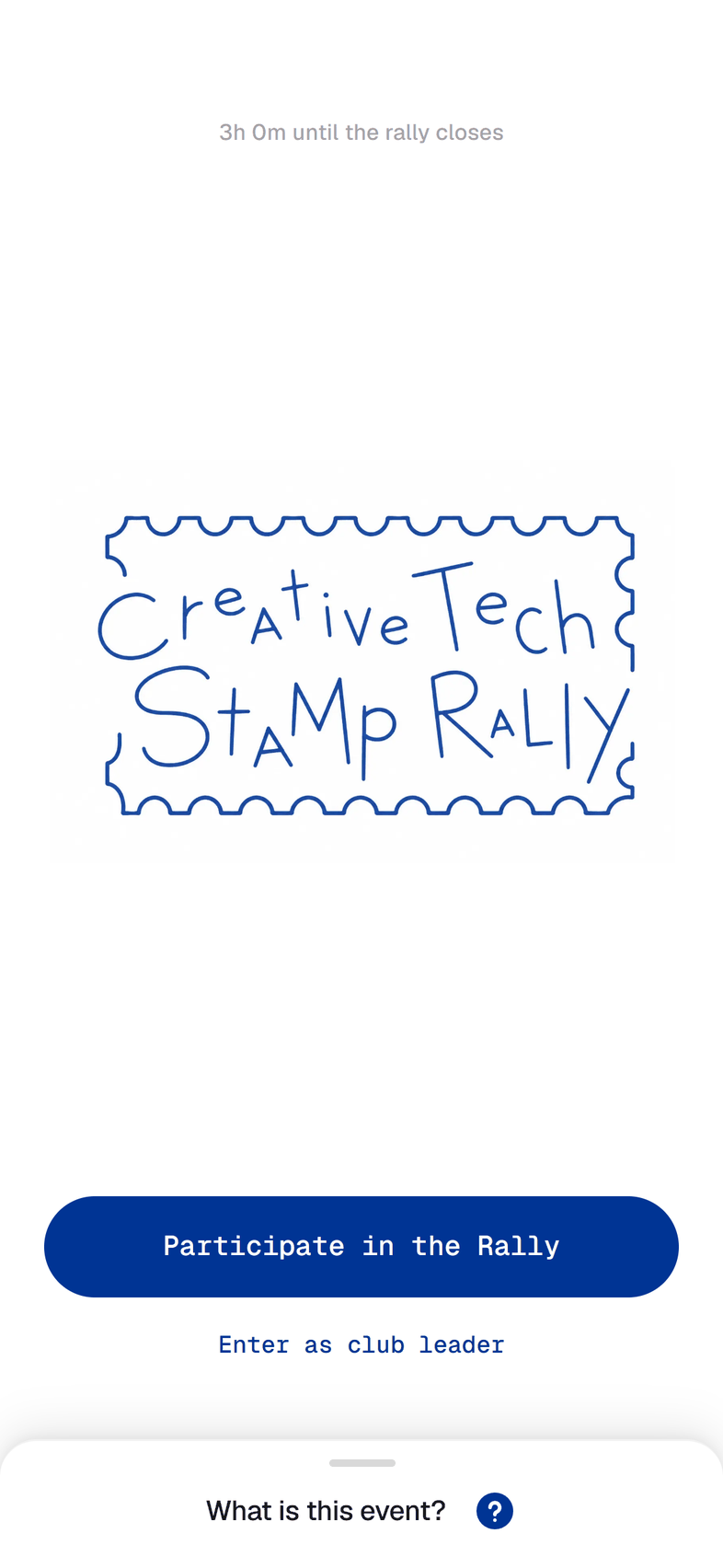
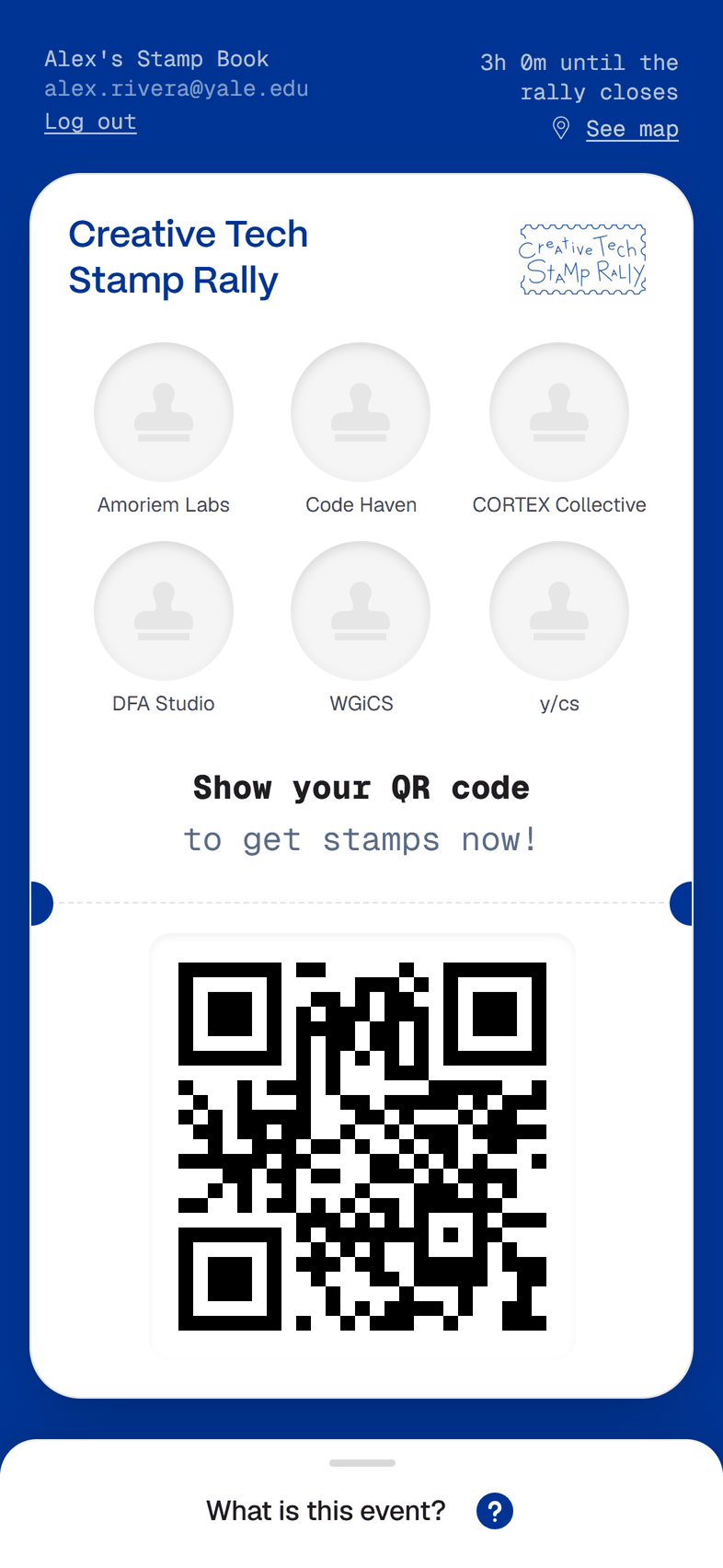
For year two, we rebuilt the rally as a web app designed to make every step faster and measurable. I designed the new visual identity, from the hand-drawn stamp logo to the blue system, and the participant experience built around a personal QR stamp card.
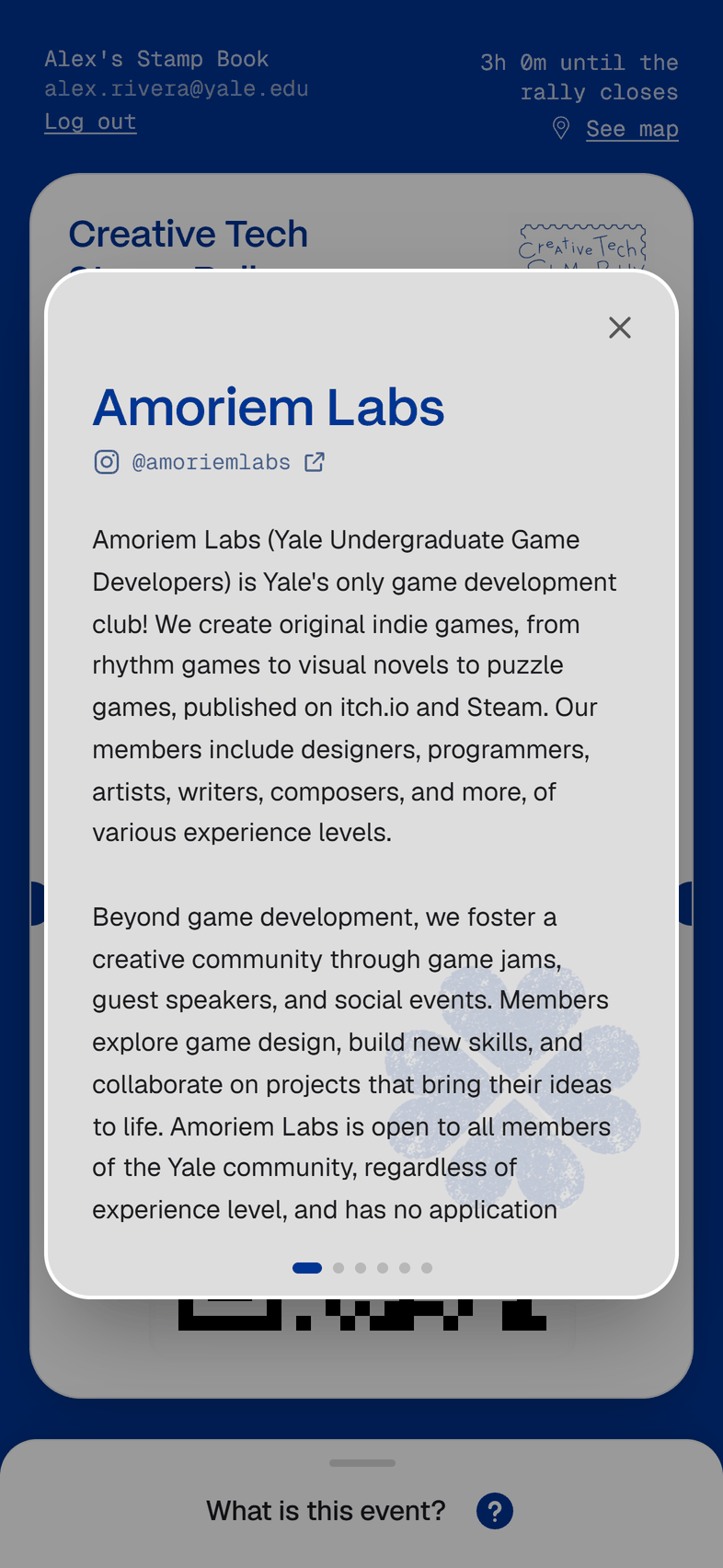
- 1 Sign inA participant sees an empty card with all six clubs, and can tap any club to read about it before reaching the booth.
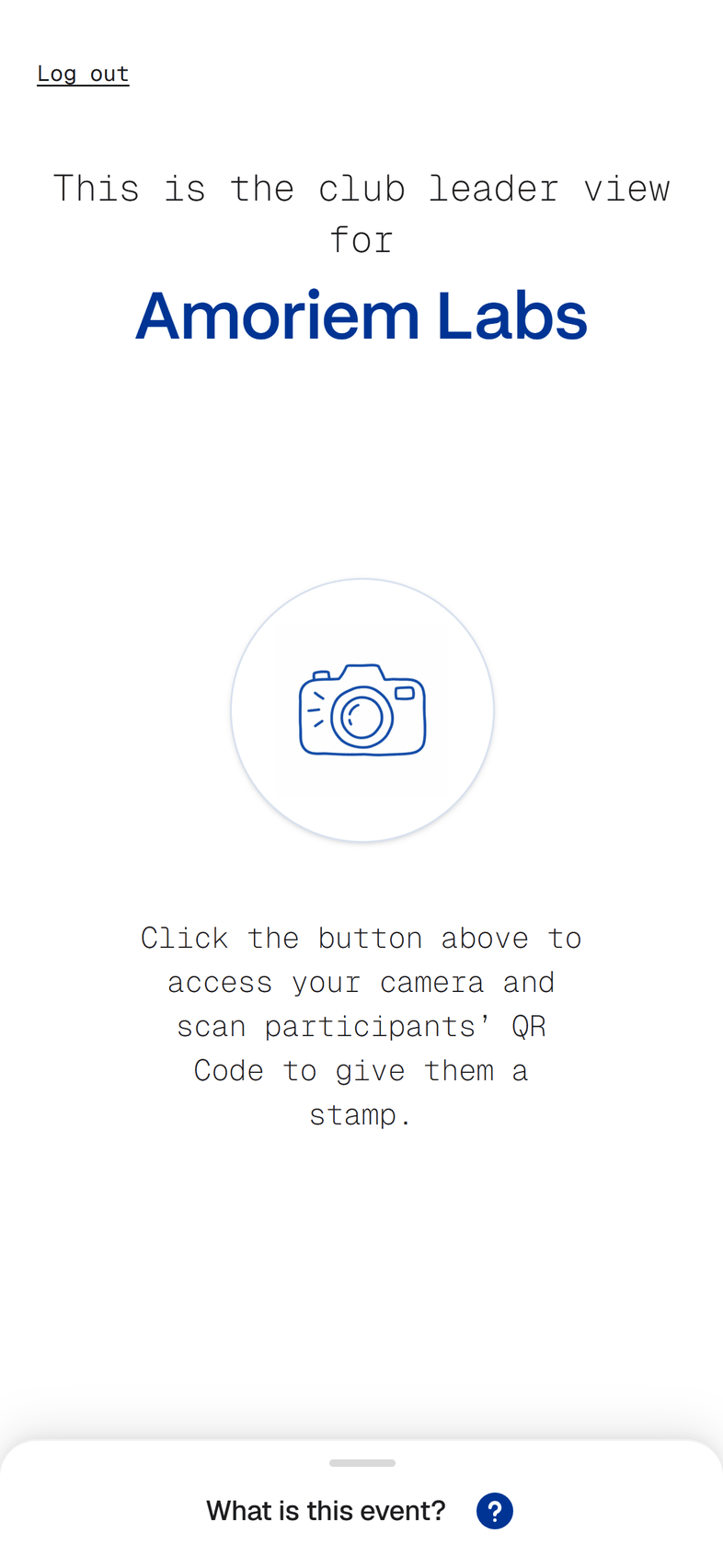
- 2 Leader scansA club leader scans the student's QR code from a separate leader view. The whole booth interaction takes a couple of seconds.
- 3 Stamp appearsThe stamp lands on the card right away. That instant feedback turns discovery into a game and pulls people toward the next booth.
04 / designing for bad wifi
One tiny request per scan
The fair was packed and the signal was terrible, and a failed scan in a crowded line kills the experience. So we kept the QR flow as light as possible. Each code carries only the student's ID. A scan sends one small request, "this student, this club," the database records the stamp, and the card updates. One small message per scan kept it working in a low-signal room.
- QR codeCarries only the student's ID
- One request"this student, this club"
- DatabaseRecords the stamp
- Card updatesThe stamp appears
05 / building with AI
Design → code → live, with AI in the loop
We explored early concepts in Figma, used Figma MCP to bring design context into code, and used Claude Code to build authentication, stamping logic, and the QR flow, with a database behind it and deployment on Vercel. We kept refining the visuals directly in the app instead of going back to Figma.
- FigmaExplored concepts and early screens
- Figma MCPBrought design context into code
- Claude CodeBuilt auth, stamping logic, the QR flow
- DatabaseStores participants and every stamp
- VercelDeployed live for the fair
AI sped up the build, so we could spend our time on the product decisions: the flow, the visuals, and making it hold up in a real, crowded room.
06 / outcome
Going digital doubled sign-ups
Going digital doubled sign-ups, from 18 to 36. Stamping got faster, clubs found it easier to run, and for the first time every stamp lived in a database, so we could see the whole funnel.
That funnel showed the real problem. Only 16% completed all six stamps. The drop-off wasn't about motivation, since these students opted in. It was about relevance. Six stops is a lot in a fair of 200 clubs, and not every club fits every student.
16%
completed all 6 stamps
- butIt landed on Yale's radarEven so, the rally landed on Yale's radar as a way to make club discovery more interactive and fun.
07 / what's next
From 6 random stops to the right clubs for you
The next step is personalizing the path. Students share a few interests, and using the Claude API with each club's description, the app recommends their top three clubs with a reason for each. Fewer, more relevant stops should raise completion.
- nextAlgorithmic club matchingStudents share interests. The Claude API reads each club's description and recommends their top three, each with a reason.
- visionPartner with Yale dataLonger term, we'd like to partner with Yale to use opt-in student data, like major and courses, to build a year-round club companion that matches students with clubs, events, and people, with privacy built in from the start.
08 / reflection
Helping people find their community is a product problem.
Year one taught us that a nudge works. Year two taught us that measurement changes the question. We went in trying to get more people through the door and came out realizing the real problem was matching the right people to the right rooms. Next time, we'd test a shorter, personalized route alongside the full six before the fair, instead of learning it from the data afterward.